
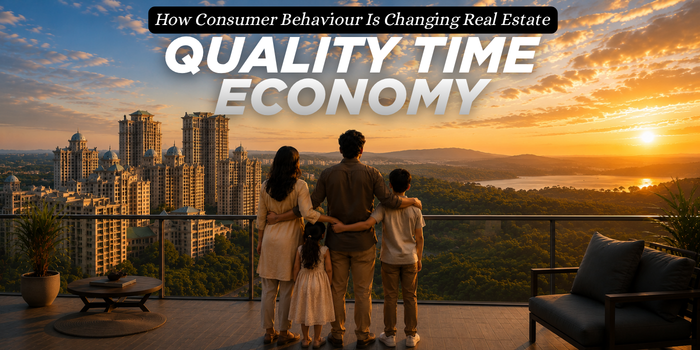
The Rise of Quality Time Economy: How Changing Consumer Behaviour Is Reshaping Real Estate
For decades, economic progress was measured largely through accumulation. A bigger home, a premium automobile, the latest technology, or luxury possessions became visible markers of success. Today, however, the definition of prosperity is quietly changing.
The question consumers are asking is no longer simply, What more can I own? Increasingly, it is: How can I live better?
This shift is giving rise to what I describe as the Quality Time Economy, a change in consumer behaviour in which the aspiration is moving beyond acquiring more possessions towards creating meaningful experiences, investing in well-being, spending time in nature, and making room for what truly matters.
This evolution is beginning to influence real estate. Consumers are increasingly looking beyond square footage, specifications, and ownership. They are seeking homes, communities, and lifestyle destinations that help them live healthier, spend more meaningful time together, and make better use of the time they have.
Alibaug: A Lens Into the Quality Time Economy
Alibaug offers an interesting lens through which to understand this shift. Once viewed primarily as a weekend escape from Mumbai, it is increasingly being considered as a destination where accessibility, nature, and a different quality of life can come together.
Improving connectivity is bringing the region closer to Mumbai's wider economic and lifestyle orbit, while its beaches, open spaces, and greenery offer something increasingly scarce in dense urban environments.
The question, therefore, is no longer simply whether people want a second home. It is whether they are looking for a different way of living one that allows them to spend less time travelling between the things that matter and more time experiencing them.
As someone who has spent four decades building integrated communities, I believe this evolution is reshaping not only how people consume, but also how they choose to live.
From the Experience Economy to the Quality Time Economy
More than two decades ago, B. Joseph Pine II and James H. Gilmore introduced the concept of the Experience Economy, arguing that consumers would increasingly value experiences alongside products. Their prediction has proved remarkably relevant.
Today, people continue to prioritise travel, wellness, adventure, learning, food, and cultural experiences. But the aspiration has evolved further. Experiences are no longer valued only for entertainment.
Increasingly, people seek experiences that add meaning to everyday life.
- Time with family.
- Time in nature.
- Time for health.
- Time for reflection.
- Time to slow down.
That, to me, is the defining idea behind the Quality Time Economy.
Wellness Is Becoming Part of Everyday Life
The growing importance of wellness reflects this broader shift. McKinsey estimates the global wellness market at approximately $2 trillion, with younger consumers, particularly Gen Z and millennials, playing an increasingly influential role in driving demand.
Well-being is becoming a more consistent consideration in how people allocate their time, money, and attention. For real estate, the question is what this means for the places people choose to call home.
How Consumer Behaviour Is Redefining Modern Living
Time Has Become the New Scarcity
The pandemic accelerated changes already underway. Hybrid work reduced the centrality of the workplace for many professionals, while digital connectivity allowed people to work, learn, and stay connected from multiple locations.
At the same time, long commutes, demanding work schedules, dense urban environments, and constant digital connectivity have created a new form of scarcity: time.
People may have greater access to products and services than ever before, but many feel they have less time to enjoy them. The modern consumer is therefore becoming more mindful about how they spend both time and money.
Success Is Being Redefined
Deloitte's 2025 Gen Z and Millennial Survey found that younger generations are seeking a balance between money, meaning, and well-being, while placing importance on work-life integration, upskilling, and personal growth.
Success is not being rejected; it is being redefined on more individual terms.
The implication for real estate is clear. The value of a home increasingly extends beyond the physical asset. It is also about the time, flexibility, relationships, and experiences that the surrounding environment enables.
The greatest luxury today may not be owning more, but having the time to enjoy what we have built.
What This Means for Real Estate
Homes Are Becoming Foundations for Better Living
Perhaps nowhere is this transformation more visible than in housing.
A home was traditionally viewed primarily as an asset and a shelter. Today, it is expected to support multiple dimensions of life, from work and learning to recreation, fitness, social interaction, and the need to pause and recharge.
This is why today's homebuyers increasingly value green spaces, sports facilities, children's play areas, cycling tracks, wellness amenities, community spaces, and thoughtfully designed public realms alongside well-designed homes.
From Home Ownership to Lifestyle Ownership
People are increasingly investing in:
- Healthier mornings
- Stronger family bonds
- Active lifestyles
- More time outdoors
- Vibrant communities
- Greener spaces
The conversation is therefore evolving from home ownership to lifestyle ownership. Consumers are looking for environments that support the way they want to live, rather than simply the things they want to own.
For the real estate industry, the value of a home is increasingly determined not only by its size, location, or specifications, but also by the quality of life it enables.
Why Nature-Led Living Matters
Nature Is Becoming Part of Well-Being
Another defining feature of this changing consumer mindset is the renewed importance of nature.
Urbanisation has delivered economic opportunity, connectivity, and convenience. Yet as cities have become denser, access to open spaces has become increasingly valuable.
Consumers are seeking environments that combine modern infrastructure with greenery, outdoor recreation, and healthier surroundings.
Research continues to explore the relationship between access to green spaces and physical health, mental well-being, social interaction, and overall quality of life.
The Real Estate Implication
The implication for residential development is significant: wellness cannot be confined to an amenity or an occasional retreat. It must increasingly be considered in the environments we create every day.
For me, the future of real estate will not be defined only by how efficiently we build. It will also be defined by how thoughtfully we create environments that support better living.
From Second Homes to Experiential Living
The Second-Home Mindset Is Changing
Changing work patterns have also redefined the role of second homes.
Historically, second homes were occasional properties visited a few times each year. Today, improved connectivity, hybrid work, and digital infrastructure are enabling families to spend longer periods away from their primary residences without disconnecting entirely from work, education, or daily responsibilities.
Parents want children to spend more time outdoors. Professionals value the flexibility to work from more restorative environments. Older generations seek healthier surroundings. Families want more opportunities to spend meaningful time together.
The result is a shift from the idea of an occasional escape towards a more integrated approach to living.
Travel Is Becoming More Meaningful
Travel behaviour reflects a similar evolution. Booking.com's 2025 Travel Predictions research found that travellers were increasingly seeking personal growth, meaningful experiences, deeper connections with loved ones and themselves, and more authentic engagement with destinations.
Based on research involving more than 27,000 travellers across 33 countries and territories, it points to a broader desire to make experiences more personally meaningful.
The implication for real estate is worth considering. The next generation of residential destinations may increasingly be expected to offer more than a place to stay, providing environments where people can work, connect, recharge, and live more fully.
Why Alibaug Is Emerging as a Quality Time Destination
Connectivity Is Changing the Region
The evolution of second homes and lifestyle-led living makes destinations such as Alibaug increasingly relevant.
For a destination to become part of everyday living, it must offer more than scenic beauty. It needs to remain connected to modern life while providing the space and natural environment that dense urban areas increasingly struggle to offer.
Alibaug is well positioned within this transformation. Its proximity to Mumbai, improving regional connectivity, and distinctive natural environment position it for the next phase of lifestyle-led growth.
The Mumbai Trans Harbour Link, or Atal Setu, has strengthened connectivity between Mumbai and Navi Mumbai and was conceived as part of a broader regional development vision. The project was also designed to improve connectivity towards Navi Mumbai International Airport and support the wider Navi Mumbai and Raigad regions.
Together with the development of Navi Mumbai International Airport, these infrastructure investments are contributing to a more connected Mumbai Metropolitan Region.
Nature Remains Alibaug's Differentiator
But connectivity alone does not create a lifestyle destination.
Alibaug's enduring appeal lies in what it offers beyond infrastructure: open skies, beaches, abundant greenery, and a pace of life that encourages people to spend more time outdoors and with one another.
This combination of accessibility and natural surroundings is particularly relevant to today's homebuyer.
The opportunity is no longer limited to traditional holiday homes, but extends to integrated communities that support a more complete way of living.
In this context, Alibaug represents more than a destination. It reflects a broader shift in how people are beginning to think about where—and how—they want to live.
The Rise of Lifestyle Destinations
Bringing More of Life Together
The growing preference for integrated lifestyle destinations is a natural outcome of these changing aspirations.
People increasingly value places that bring together:
- Accessibility and recreation
- Wellness and convenience
- Nature and infrastructure
- Community and privacy
- Connectivity and a sense of escape
The opportunity is not simply to create more amenities. It is to reduce the friction between different parts of life, so people spend less time travelling between them and more time actually experiencing them.
Ultimately, people are searching for something increasingly scarce in urban life: time well spent.
Building Communities for the Quality Time Economy
A Nature-Led Approach to Living
As developers, our responsibility extends well beyond constructing buildings. We are creating environments that shape how people live, interact, and build lasting memories.
That philosophy has always guided our thinking at Hiranandani Communities.
The vision for Hiranandani Sands Alibaug was never simply to create another residential destination. It was to create a nature-led living community that enables families to make more time for the people and experiences that matter.
Creating More Opportunities to Live Well
The objective is to bring together nature, recreation, active living, community, and well-being within an integrated destination.
The larger idea is simple: a home should not only provide a place to live. It should create more opportunities to live well.
For families, that may mean children spending more time outdoors. For professionals, it may mean the freedom to work from a more restorative environment. For older generations, it may mean access to a healthier and more relaxed way of life.
For everyone, it can mean more opportunities to spend time together.
The aspiration is not simply to own another address. It is to have more time for the moments that truly matter.
The Future of Real Estate Will Be Measured by Quality of Life
Every generation redefines prosperity.
For previous generations, success was largely measured by the assets accumulated. For the next generation, success may increasingly be measured by the quality of life those assets make possible.
That is the larger significance of the Quality Time Economy.
Economic growth will continue to create wealth. But the purpose of that wealth is evolving. Increasingly, people aspire to invest not only in financial assets, but also in experiences, relationships, health, and environments that enrich everyday life.
For the real estate industry, this represents a profound shift in responsibility. The question is no longer only how much value a development adds to a location. It is also about how much life it adds to the people who live there.
Ultimately, the greatest luxury of the coming decade may not be owning more. It may simply be having more time to enjoy the life we have built.
That, in many ways, is the true promise of the Quality Time Economy: creating places that give people more opportunities to live well, connect meaningfully, and make time for what matters most.




0 Comments